Beyond mere realism, we analyse the psychological weight of Ron Mueck’s Boy, in which monumental scale magnifies the profound fragility and existential dread of human existence.
The Librarian’s Verdict: The Paradox of Scale and Soul
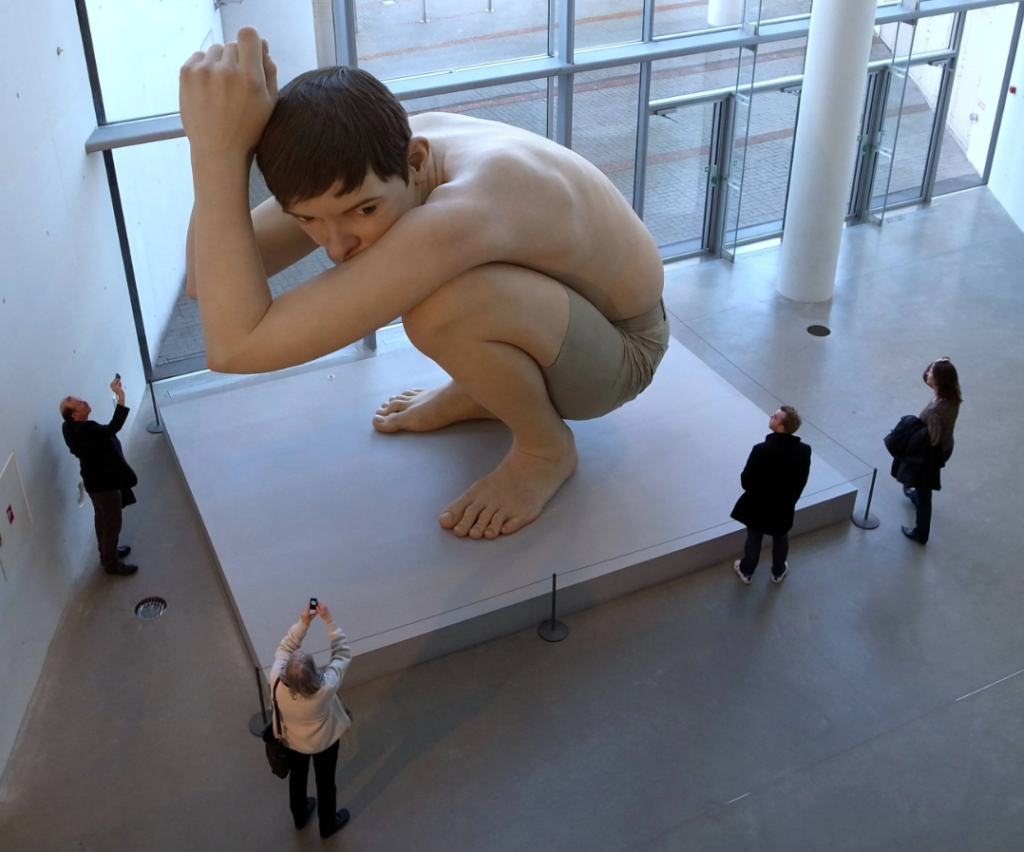
In a profound inversion of classical heroism, Ron Mueck’s Boy redefines monumentality not through strength, but through the raw exposure of adolescent vulnerability. Standing at a staggering five metres in height, this gargantuan figure confronts the spectator with a presence that is as disconcerting as it is monumental. When it was first unveiled at the turn of the millennium, the work redefined the boundaries of contemporary sculpture through its uncompromising hyperrealism.
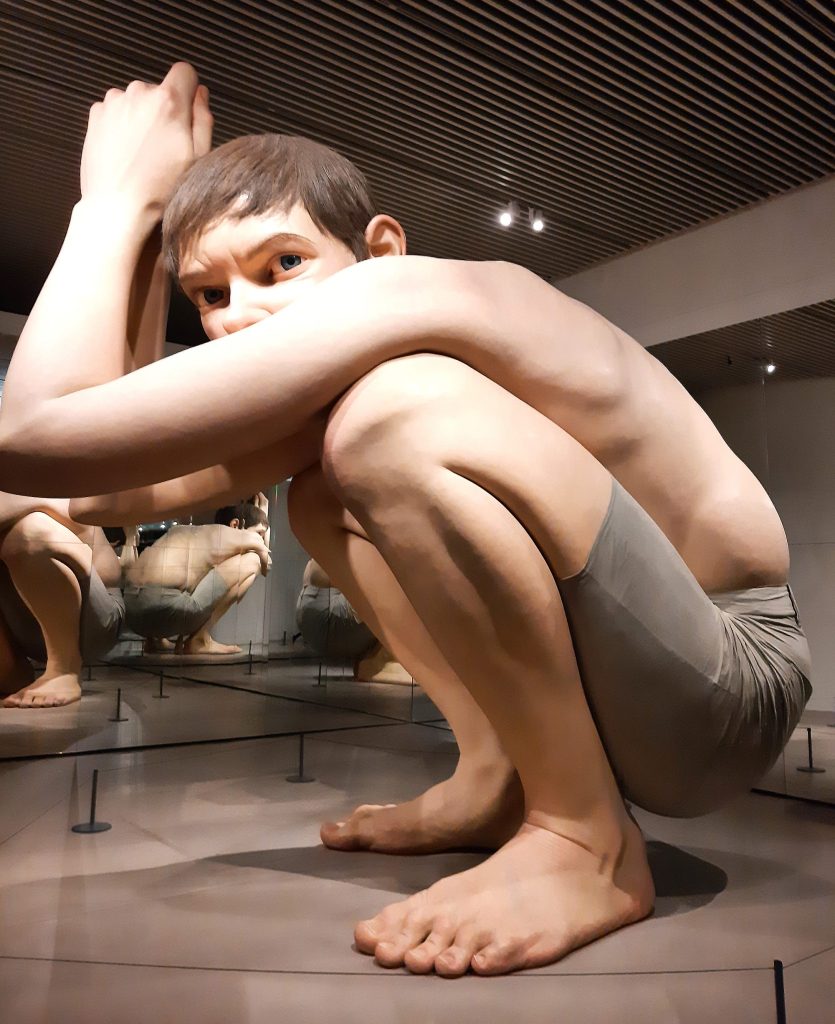
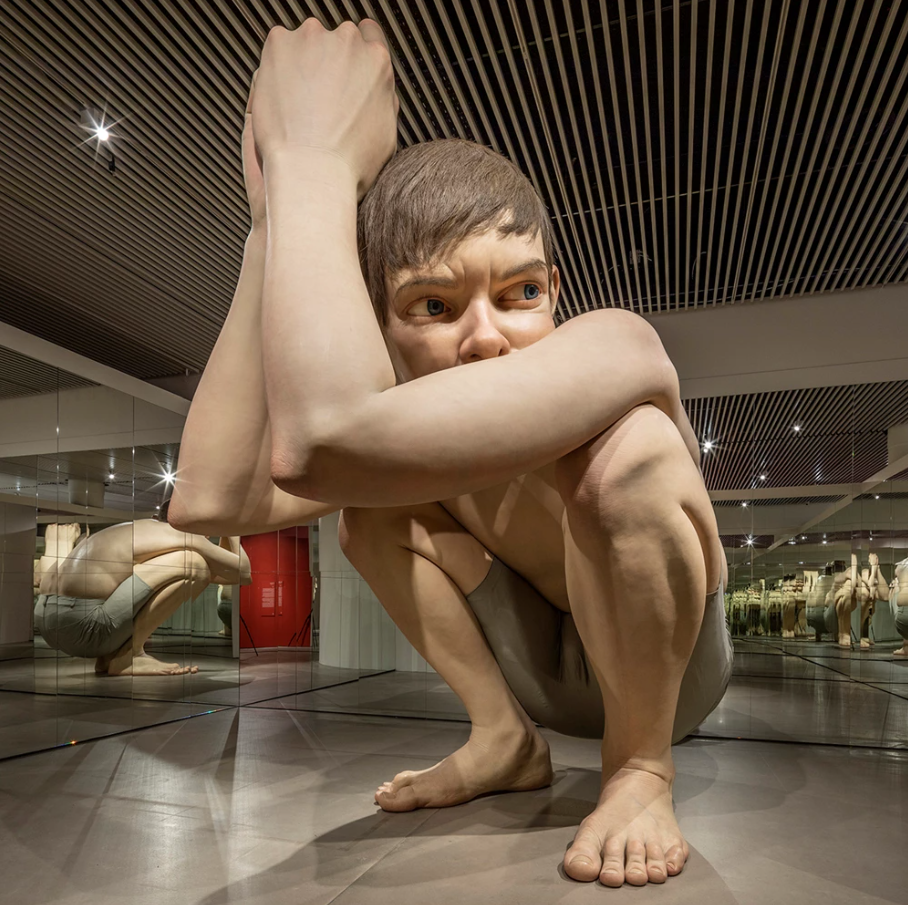
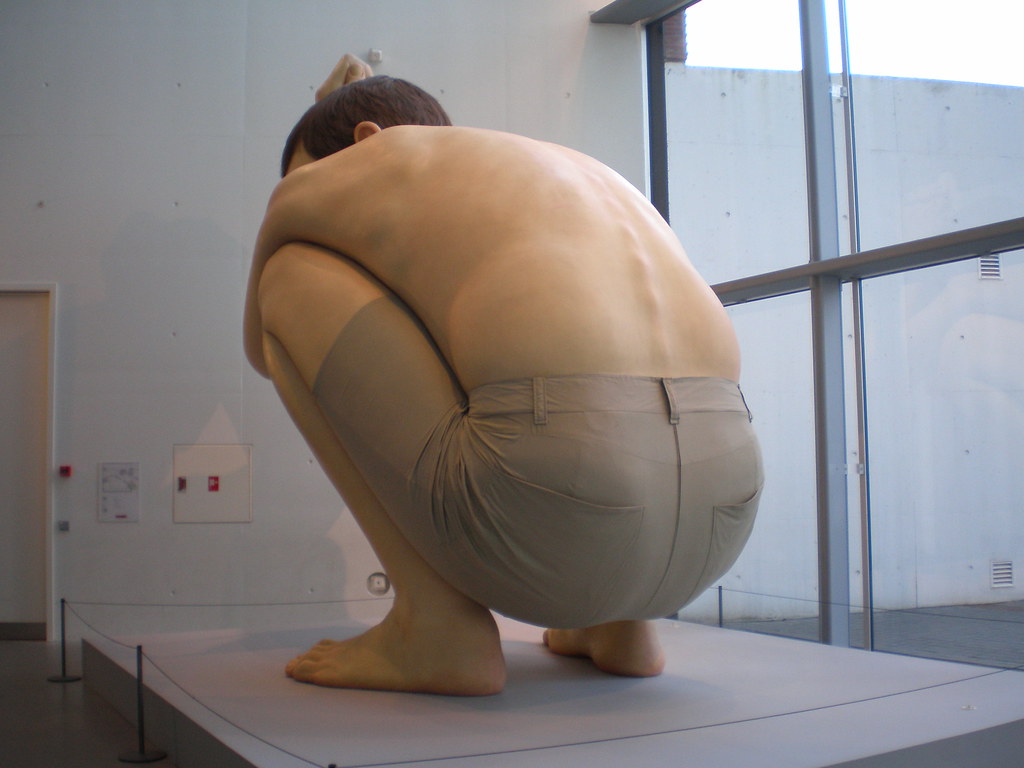
The figure depicts a youth hunched in a defensive, foetal crouch, radiating an aura of profound fragility despite its colossal dimensions. To stand before this object is to experience the uncanny. It creates a cognitive dissonance where the absolute biological precision of the resin and silicone skin clashes with its impossible scale. Here, monumentality does not signify traditional power; instead, it serves to amplify the raw and exposed nerves of human existence. Every vein, hair follicle, and subtle skin tone is meticulously rendered, forcing a confrontation with the startling intimacy of a stranger.
I. The Technical Mastery of Tactile Verisimilitude
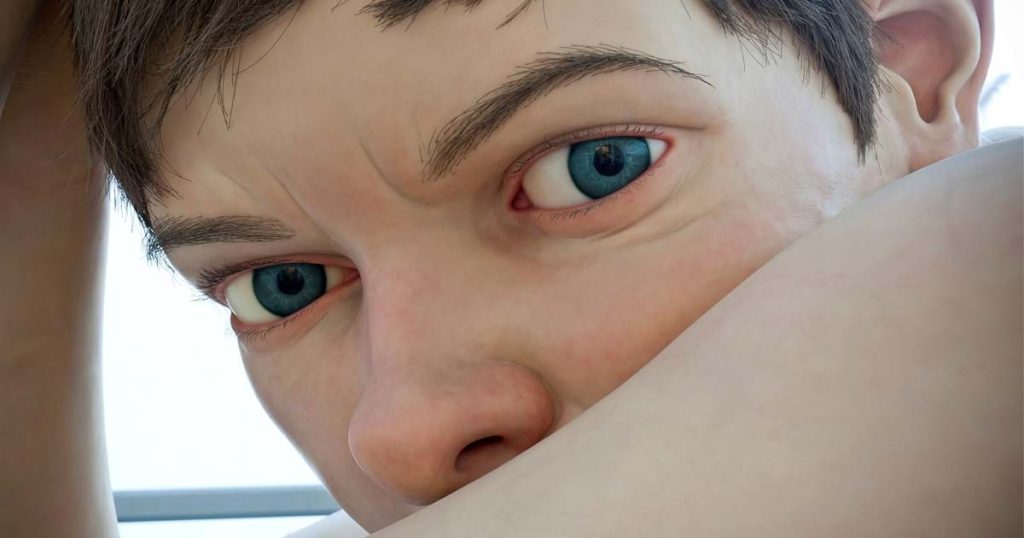
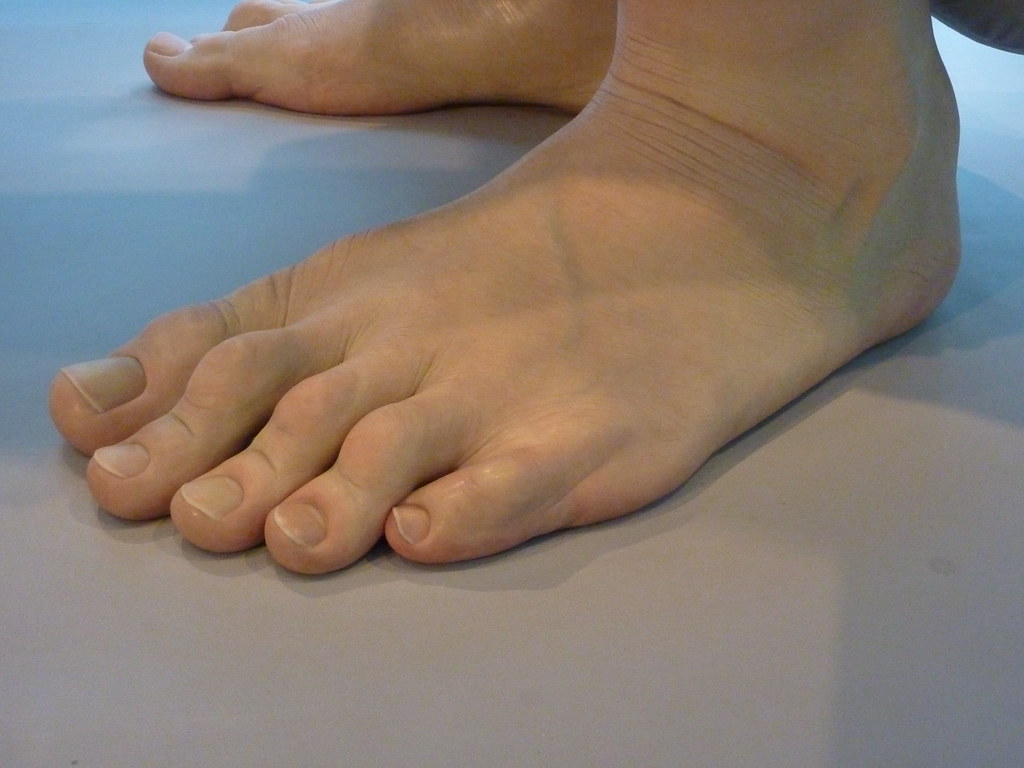
The aesthetic power of Boy lies in Mueck’s obsessive commitment to hyperrealism—a labour-intensive process involving silicone, fibreglass, and hand-applied resin. Whereas classical sculptors sought to idealise the human form, Mueck pursues a tactile truth that borders on the forensic. Every translucent vein beneath the pallid skin, every individual hair follicle, and the subtle mottling of the epidermis are rendered with a precision that mimics life with haunting accuracy.
This is not merely a display of technical virtuosity; it is a deliberate manipulation of empathy. By presenting a surface that appears to pulse with life, Mueck dismantles the emotional distance typically afforded by stone or bronze, transforming an artistic encounter into a raw, visceral confrontation with the flesh.
II. The Psychological Distortion of Scale
Traditionally, sculptural scale denoted divinity or civic virtue. Mueck subverts this, applying monumentality to a moment of profound withdrawal. By enlarging a crouching adolescent to the size of a building, he externalises an internal state of anxiety. The boy does not command space like a victor; he shrinks from an invisible threat, his massive scale only heightening the desperation of his posture.
Beyond technical mimicry, Mueck navigates the Uncanny Valley to transform discomfort into empathy. This inversion of the heroic colossus makes us feel diminished, yet oddly predatory as we peer into a magnified terror. Crucially, the figure’s wary, distant gaze never meets the spectator’s, creating a psychological barrier that reinforces his vulnerability. By inflating a defensive adolescent to these proportions, Mueck creates a psychological scale that externalises the overwhelming nature of existential anxiety, amplifying the raw, exposed nerves of existence.
III. An Iconography of Isolation and the Modern Gaze
The posture of Boy with hands tucked and eyes casting a wary, sidelong glance serves as a poignant modern icon of isolation. Unlike traditional monuments that look outward to engage with the public, this figure’s gaze is darting, suspicious, and profoundly lonely. This sidelong look creates an invisible psychological barrier, embodying the deep-seated alienation of a hyper-connected yet emotionally detached society.
Crucially, this evasive gaze never meets the spectator’s, suggesting a defensive interiority that guards against intrusion. Despite its monumental scale, the figure appears not as a threat but as a subject in need of protection, amplifying the profound paradox of the work. In this defensive crouch, we recognise a universal desire to retreat from a demanding world; it functions as a silent monument to the vulnerability and internalised isolation inherent in the contemporary human condition.
 Technical Insight: Engineering the Uncanny
Ron Mueck’s precision scaling of the original clay model ensures anatomical integrity at a colossal magnitude, a feat of engineering essential to his visceral realism.
Coda: The Frozen Portrait of Eternal Immaturity
Ron Mueck’s Boy remains a seminal masterpiece because it transcends the novelty of its hyperreal finish to touch upon a universal human condition: the persistent presence of the inner child within the adult world. It is a frozen portrait of eternal immaturity, caught in the transition between innocence and the weary weight of experience. By rejecting the stoic permanence of marble in favour of the visceral reality of silicone, Mueck reminds us that the true measure of humanity is found not in strength, but in the capacity for vulnerability. Five centuries after the Renaissance, the giant returns not as an idealised civic hero but as a silent and anxious witness to the unsettled condition of modern life.
In the presence of this silent giant, we are left to ask.
Does our true humanity lie in the strength of marble, or in the translucent flesh of a frightened boy?
 Appendix
I. Technical Profile: The Making of Boy
Timeline: 8 months of meticulous, sustained labour (1999).
Scale: Evolved from a 40cm maquette to a final 4.9m x 4.9m x 2.4m form.
Structure: Silicone and polyester resin over a steel-armoured fibreglass frame.
Artistry: Multi-layered pigmentation with tens of thousands of manually inserted hairs.
II. Location and Exhibition History
Current Institution: ARoS Aarhus Kunstmuseum, Denmark (Permanent Collection)
Notable Debut: 49th Venice Biennale (2001), Millennium Dome, London (2000)
Curatorial Status: One of the most iconic examples of contemporary hyperrealist sculpture.
 References